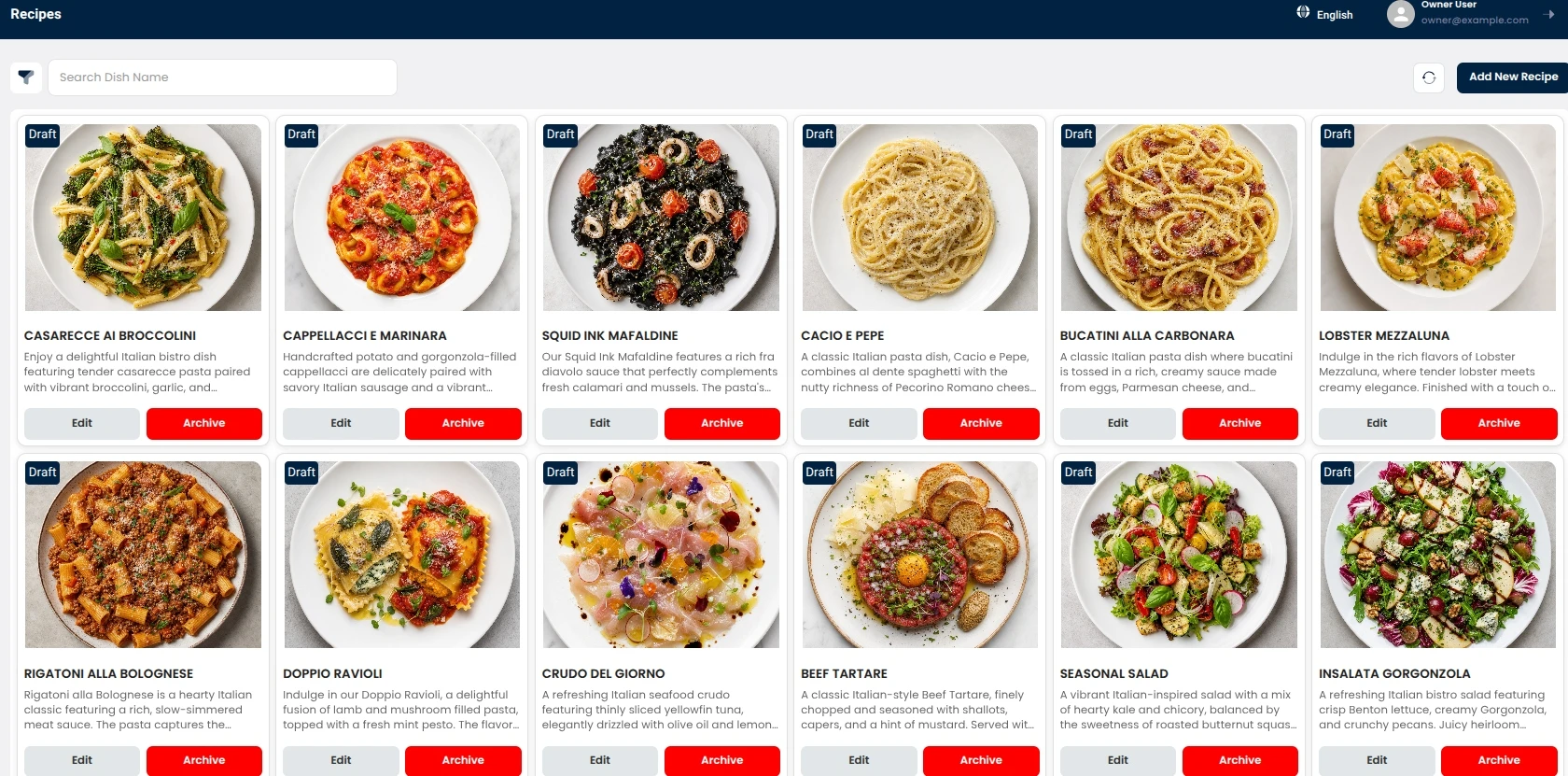
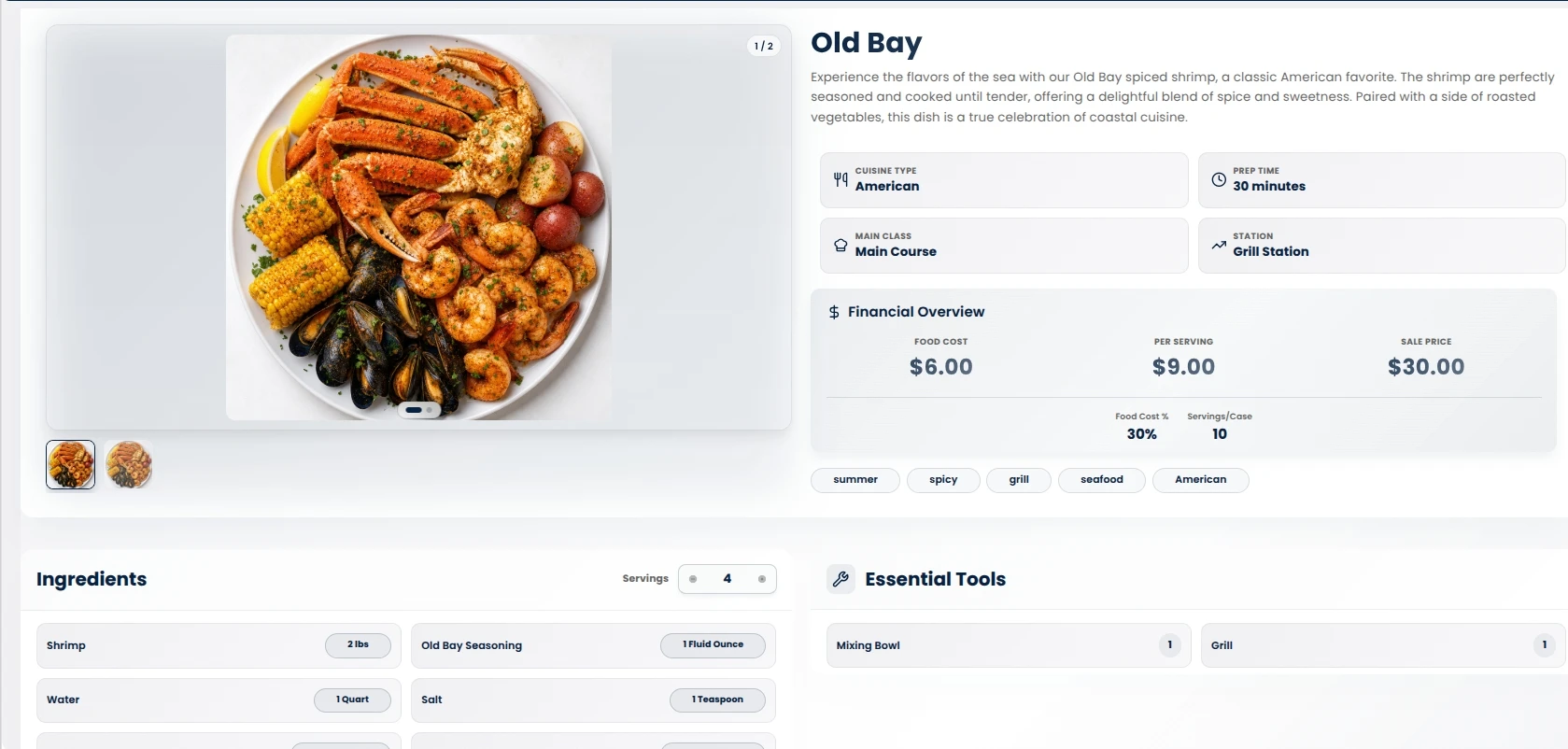
01 / RECIPES
Your standards, not someone’s memory.
When recipes are scattered, details get lost between shifts. Keep ingredients, portions and preparation methods in PlatePrep so your team can refer to the same instructions.
Less searching. Fewer repeated explanations.
02 / PREP
Make the next task clear.
A verbal instruction can be missed in a busy kitchen. Use prep lists, assignments and task tracking to make the daily work visible, then have the team update progress as they go.
A shared plan instead of another round of questions.
03 / TRAINING
Guidance that stays after the explanation.
A new employee shouldn’t have to remember everything from one conversation. Put recipe instructions and training videos where employees can revisit them while learning your standards.
A reference to reinforce what you teach.
04 / COMMUNICATION
Keep the instruction close to the work.
Important details can disappear in a long text thread. Use team messaging and shift notes to share operational information in PlatePrep, alongside the work your team is doing.
Less chasing down the latest answer.
05 / ORDERING & INVENTORY
Bring the lists into the same conversation.
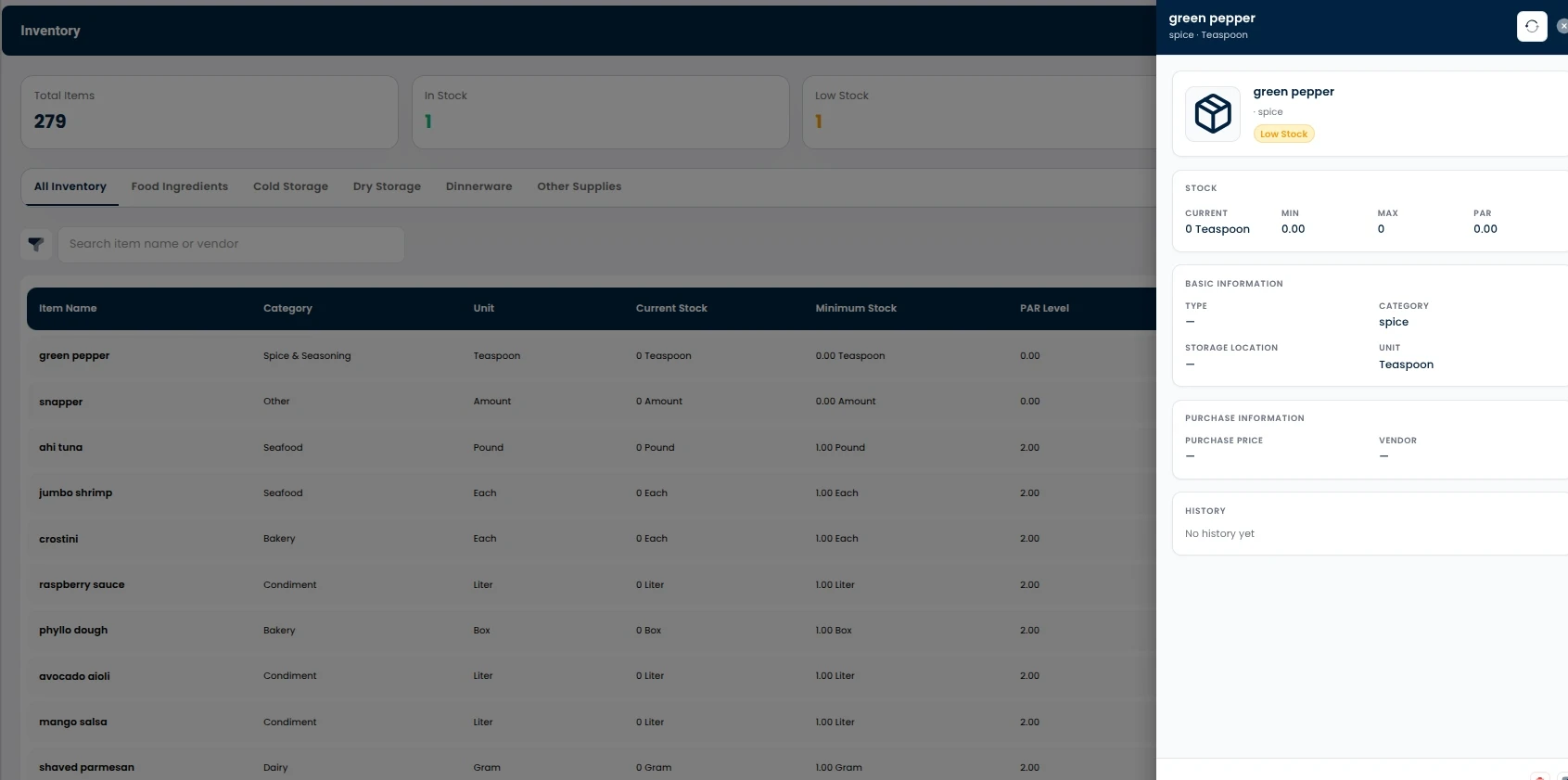
Build an order guide from your menu, review items and quantities, and use inventory records to check stock and par levels. Your team still verifies counts, matches items and reviews orders before sending.
More informed purchasing, with people in control.
06 / FOOD-COST VISIBILITY
Know what goes into the plate.
Review ingredient quantities, recipe costs and selling prices together. Keep the inputs current as costs change, then decide whether the recipe, portion, supplier or menu price needs attention.
Clearer cost decisions, not a promise of automatic profit.